
The problem
TripleN makes sleepwear and loungewear in Bandung. Orders came in over chat and were typed into a spreadsheet by hand, and every shipping label was laid out one at a time in Canva. In a busy week that's a lot of copying, and a lot of chances to get an address or a size wrong, which a customer only finds out about when the wrong parcel arrives.
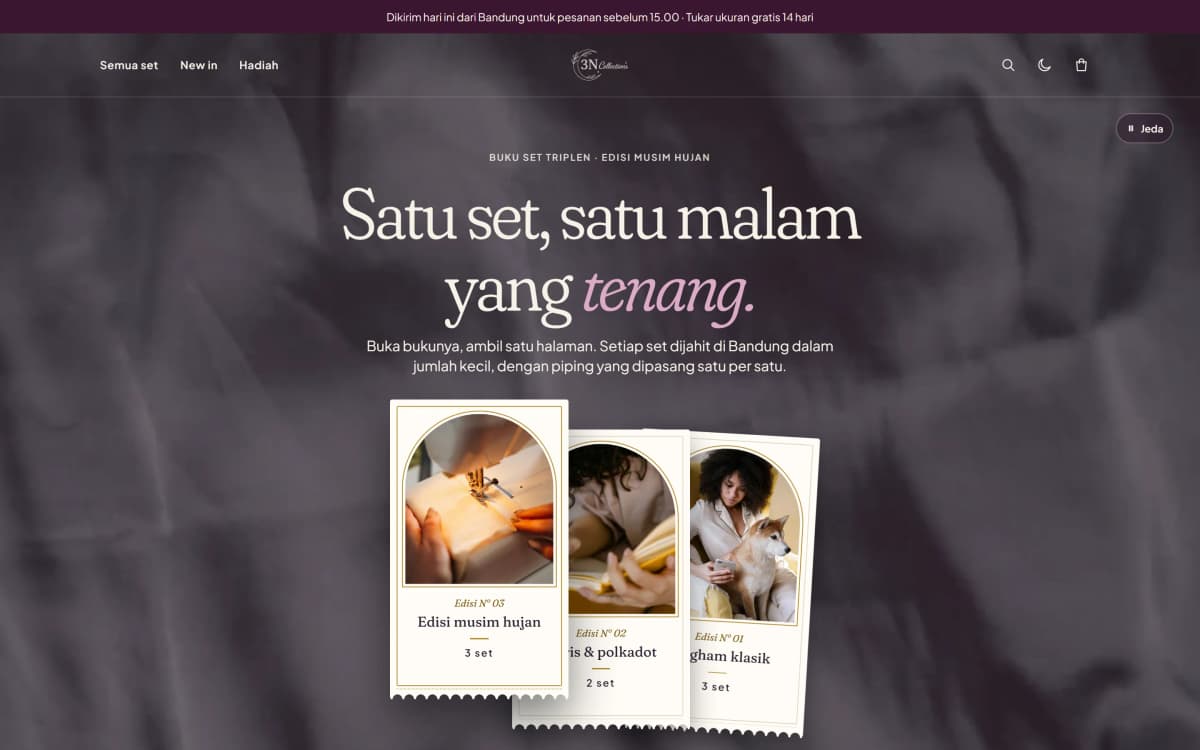
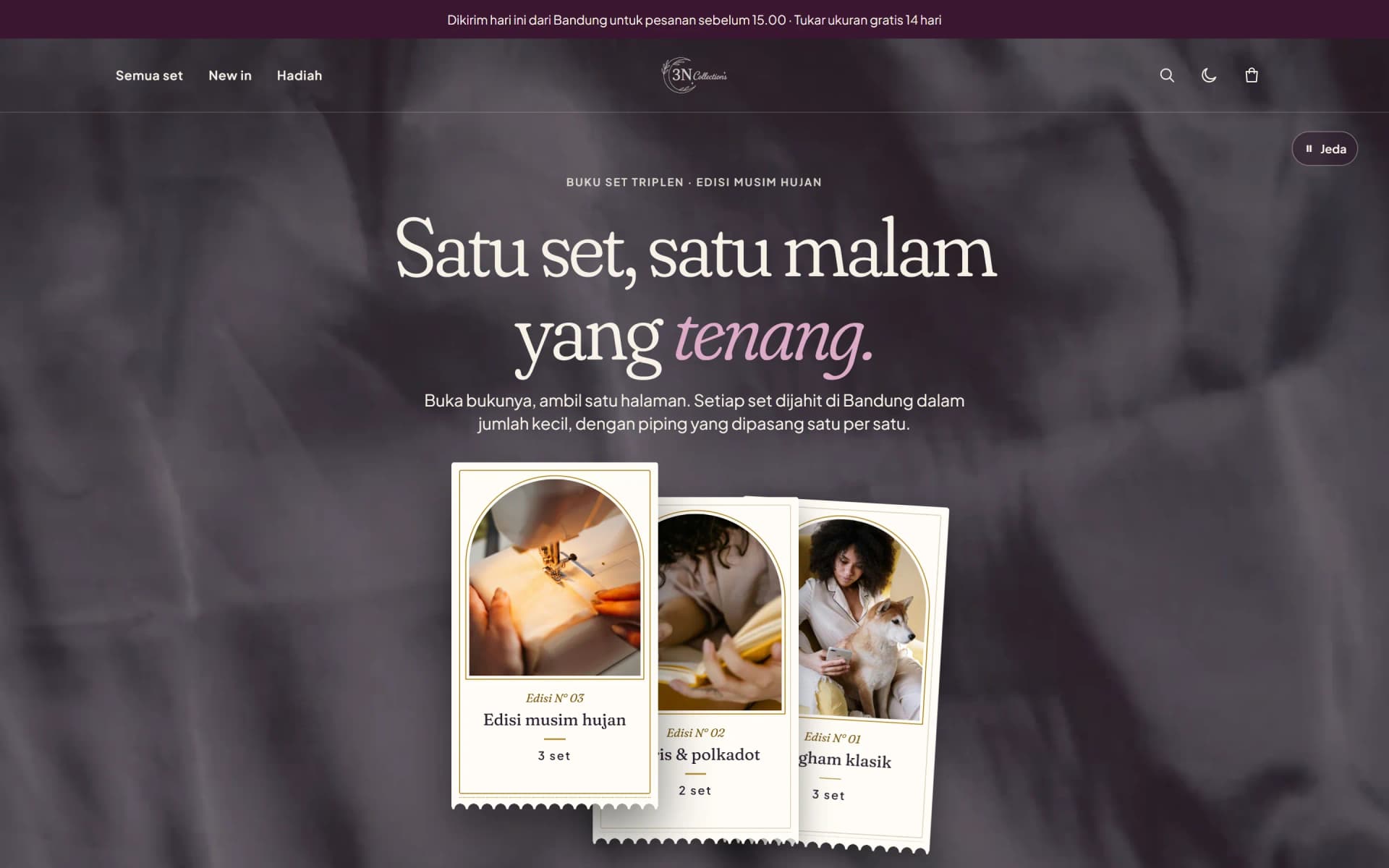
The brand also wanted a store of its own, one that feels as considered as the clothes, instead of sending every customer into a chat to ask what's in stock. Behind the scenes, there was no single place to see orders from every channel, or what each set actually cost to make.
What I built
A simple order form first, then an online store and a back office that share one database.
Starting with what the team already used
I didn't start with the store. The quickest relief was the daily copying, so the first piece was a Google Apps Script order form on top of the spreadsheet the team already used, keeping its existing tabs and data. Type an order in once, and the form numbers it, adds up the total with shipping, fills the order log, and makes a print-ready PDF label from a slide template. There was nothing new to learn, and the copying was gone.
Building the store on safe ground
Then came the store itself: two Next.js apps, the storefront and the back office, sharing one database. I built it around a few rules from the start. The server works out every price and total from the database, never from what the browser sends. Payment goes through Midtrans, so card details never touch the store. And an order only counts as paid once Midtrans's signed notification arrives and the payment status checks out.
How an online order flows
Step 1 / 4
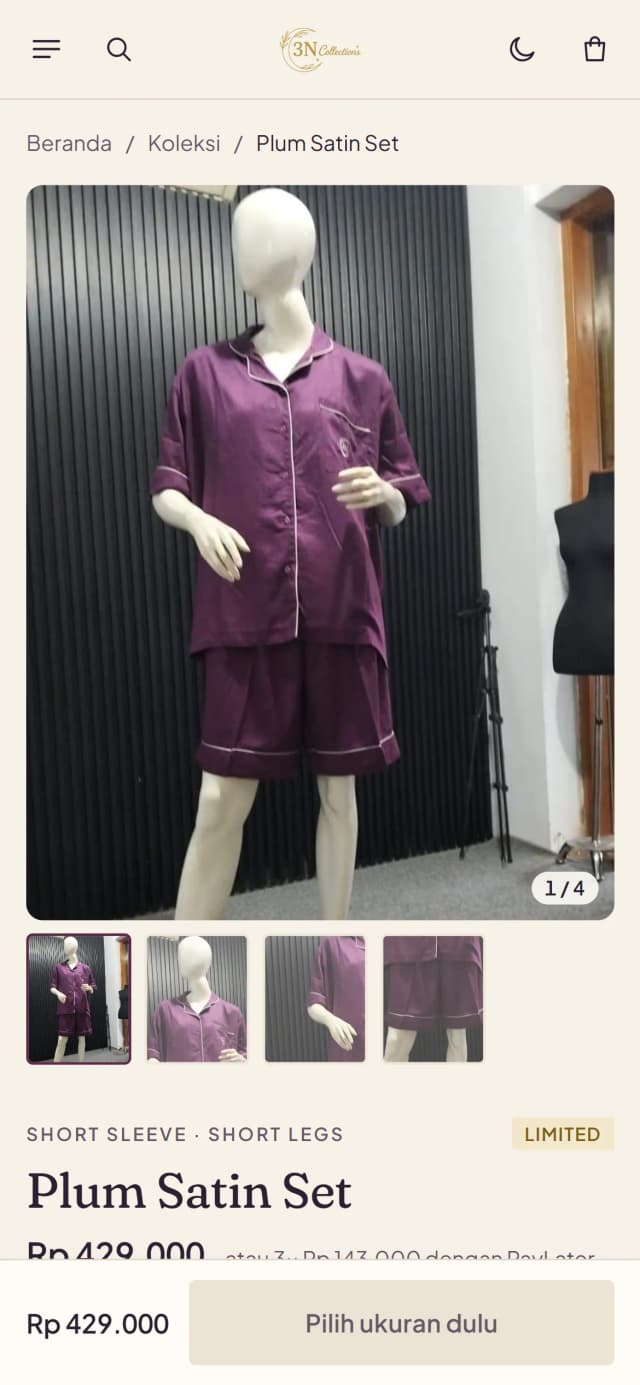
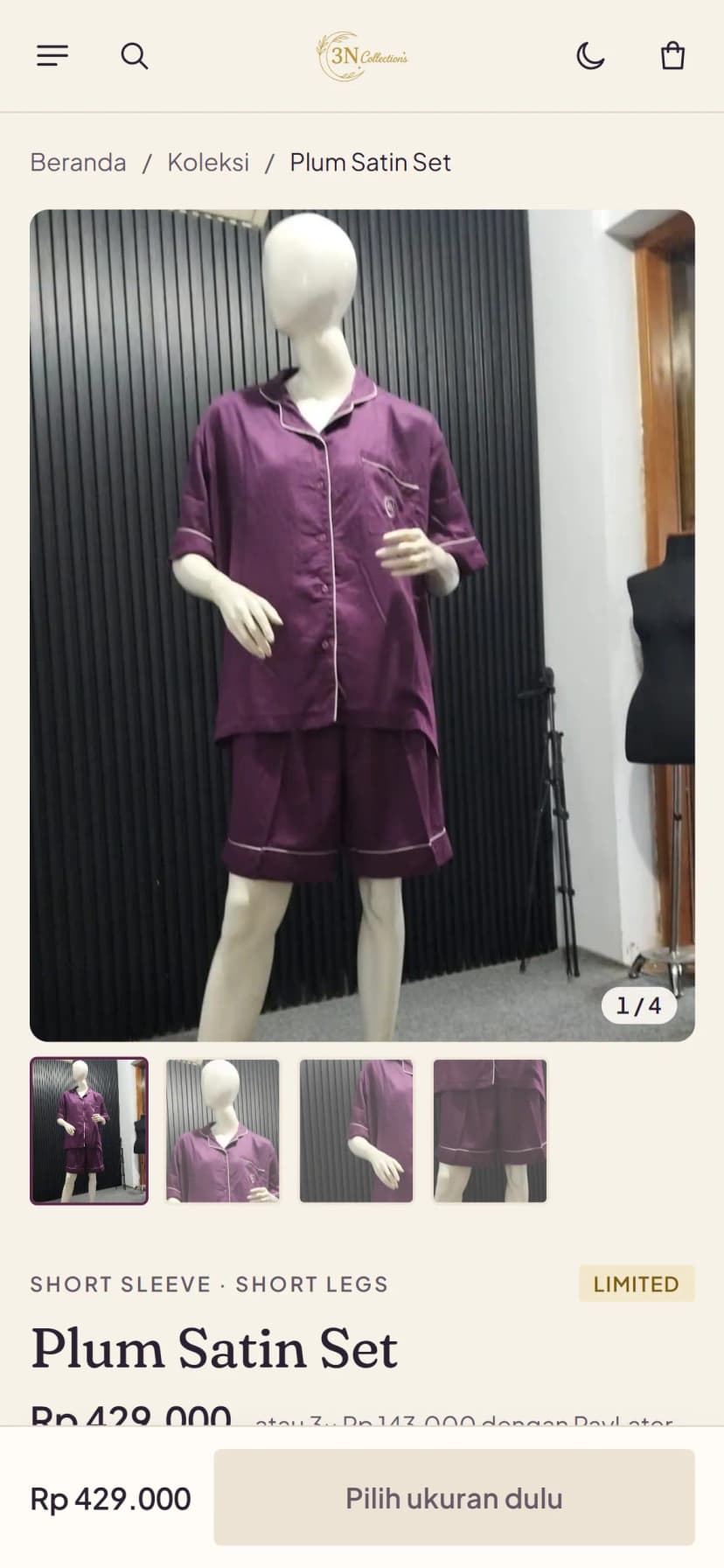
- A customer browses the collections, picks a set and a size, and adds it to their bag.
- At checkout, live shipping rates come in from the couriers, and the customer pays with QRIS, a virtual account, an e-wallet, a card or PayLater.
- While the order waits for payment, its stock is held so nobody else can buy the same last set. If the payment expires, the stock is released.
- Once Midtrans confirms the payment, the order appears in TripleN Studio with all the others, ready for its shipping label.
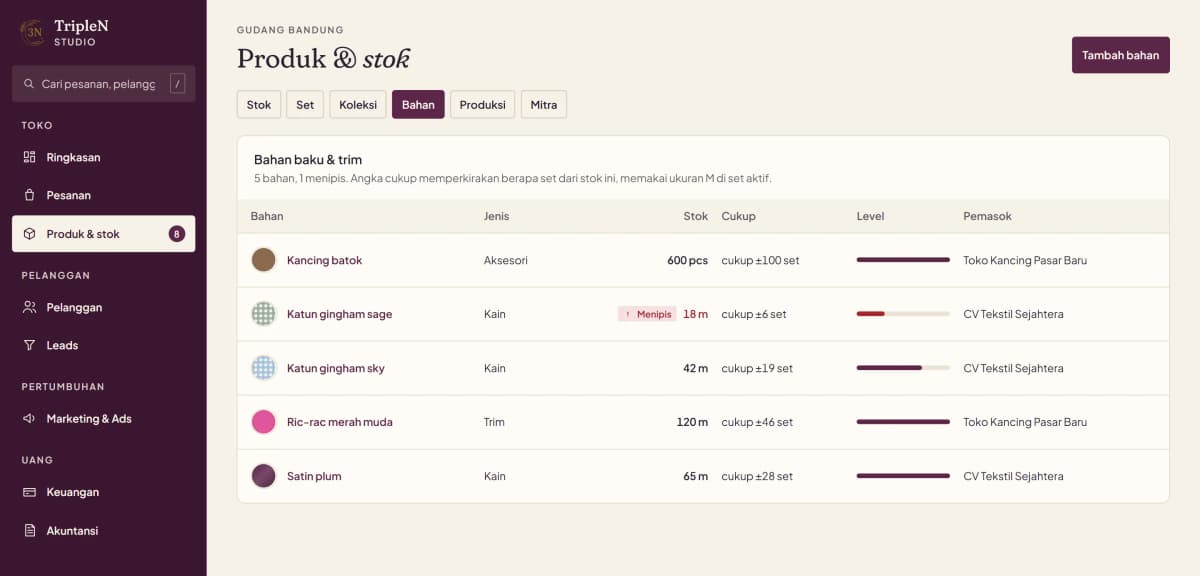
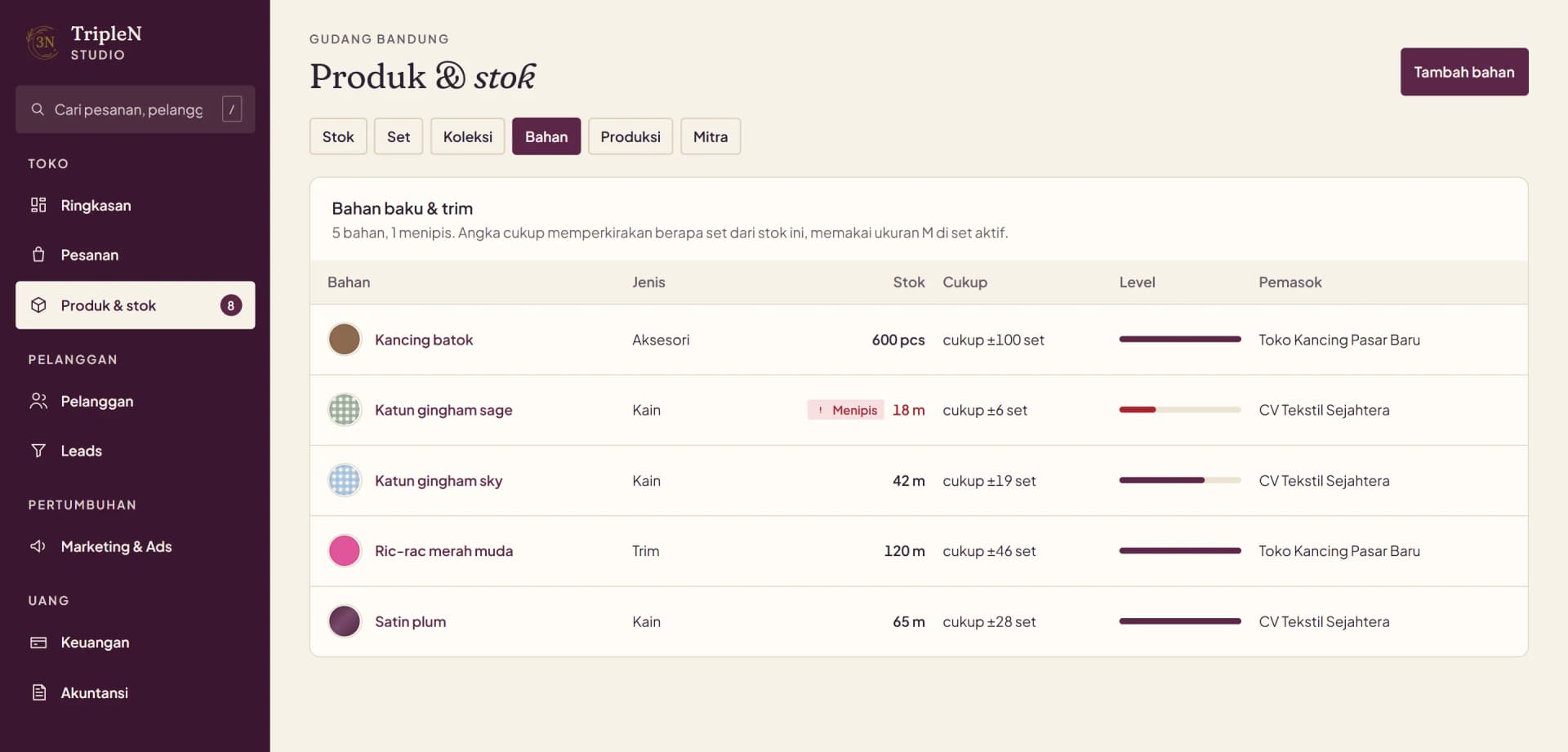
The back office, TripleN Studio, keeps orders from every channel in one list. Orders from WhatsApp or Instagram are entered as real orders, so they take stock and count in the numbers just like website orders, and shipping labels can be printed for many orders at once. Studio also follows production: fabric coming in from suppliers, work going out to the tailors, and what each set ends up costing to make.
The result
The order form replaced the hand-copied spreadsheet, and labels now come out of the data instead of being laid out one by one.
The new store and Studio are built and tested, and are getting their last checks before launch: a few real payments end to end, final product photos and the store policies.